Jakarta Globe, June 25, 2012
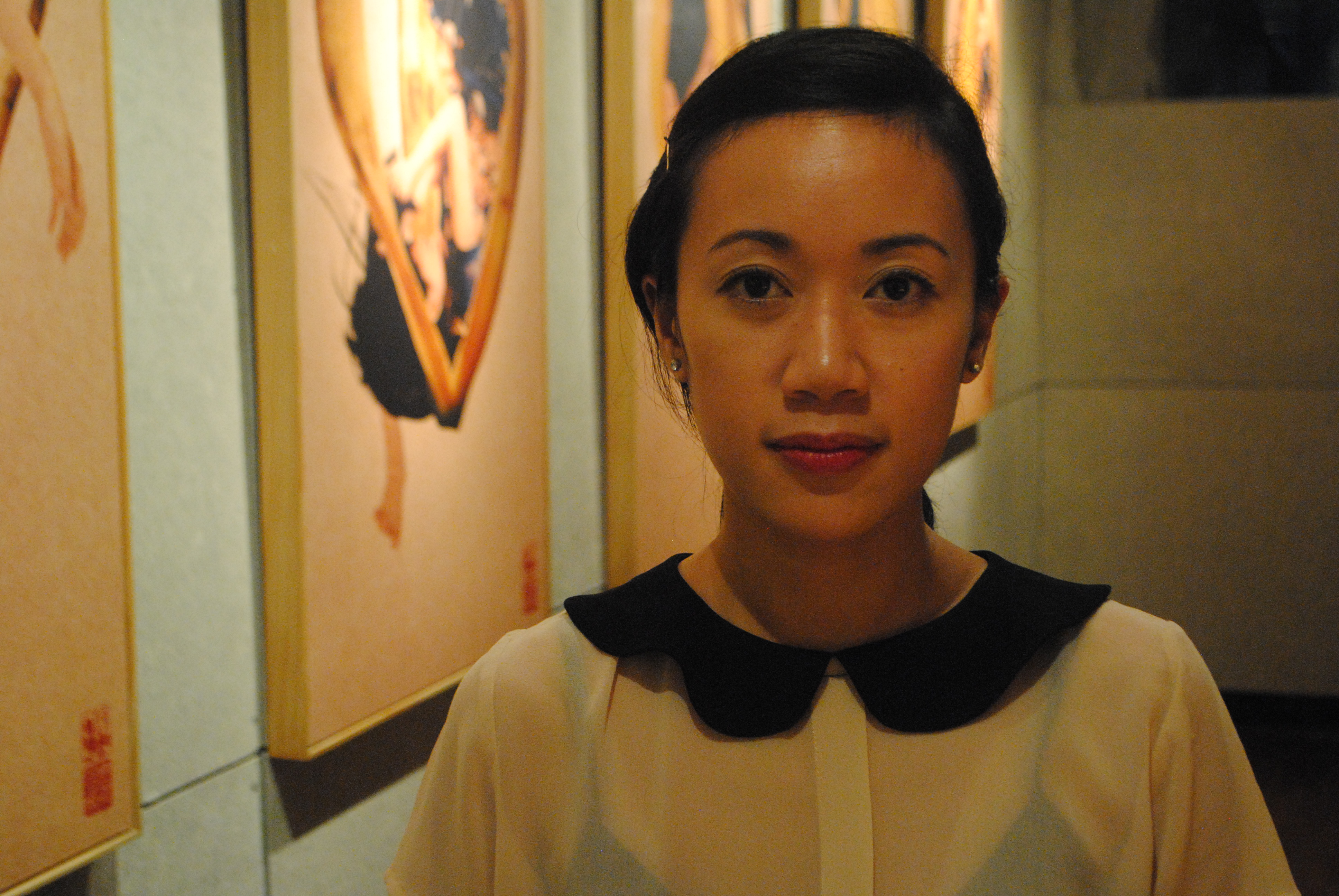
Mitha Budhyarto does not consider herself an artist. But the 28-year-old curator and lecturer has committed most of her life so far to the arts.
Newly returned to Jakarta after a 10-year stint studying in London, Mitha already has a couple of exhibition credits to her name as a curator, at Vivi Yip Art Room and Dia.Lo.Gue artspace, both in South Jakarta.
She has also taken on the challenging task of teaching art appreciation to engineering and accounting students at Pembangunan Jaya University (UPJ) in Tangerang.
Mitha’s mission is to make art accessible for everyone, no matter what their background.
While she herself enjoys exploring the academic aspects of art history, she also understands that you don’t need a grounding in Freudian theory or postmodernism to enjoy a beautiful work.
“In my opinion, there are things that people can only attain through art,” she said. “There is the challenge to think creatively, to have imagination and the desire and spirit to be free.”
Academic aesthetics
Mitha’s interest in art lies in playing with concepts the way an artist would experiment with a palette of paint.
While she used to enjoy working on art projects as a teenager, these days she is more interested in introducing art concepts to others, by presenting them creatively.
“In the end, I preferred reading and writing to playing around with paint or resin,” she said. “I think my creativity is channeled differently.”
Mitha’s background has given her a rich palette to get creative.
After completing an undergraduate degree in philosophy and art history, she moved on to graduate studies in the philosophy of aesthetics, and finally graduated with a doctorate in cultural studies.
“Being a curator is like applied academia,” she said. “All the concepts I have studied can be tweaked to become a concept for an exhibition.”
Some exhibitions require her to work with an existing concept from an artist, as was the case with “The Boy Who Became a Monster,” showing the work of street artist Darbotz at Vivi Yip last year.
But in other exhibitions, she can let her own imagination run free. In a recent group exhibition at Dia.Lo.Gue, Mitha was able to explore her own ideas, by allowing artists to respond to a set theme.
With the title “Maps, Re-Imagined,” she asked creative industry workers, such as photographers and designers, with a bent for art to respond to the physical and mental maps of their everyday lives.
The idea came from her own research project on the philosophy of space and place. She was thrilled to see the works that her theme inspired.
The artists responded in glass, paint and wood, in multimedia projects, landscapes and soundscapes.
“Every project is different,” Mitha said. “But for me, coming up with the theme is the most satisfying part.”
Art for everyone
When she’s not presenting art concepts to the public through her exhibitions, Mitha can be found presenting them to a mixed class of Universitas Negeri Jakarta students in the liberal arts department.
At UNJ, all students are required to take a course in art appreciation, whether their main studies are in politics, economics or engineering.
Mitha’s job is to hold the interest of students not only unfamiliar with art theory, but also to impress on them the importance of studying art in general.
“What’s funny is that those who end up most interested in the class are those studying things like management, accounting and so on. I think maybe it’s because they’re bored with the things they study every day,” she said.
Drawing on a strong background in Western art history from her studies in London, Mitha introduces her students to periods starting from the Renaissance through to Cubism, Pop Art and installation work.
Returning home
But the period she herself is only just discovering now is the boom in contemporary art in her home country — Indonesia.
Mitha said she is fascinated to see how Indonesia’s past, present and future are played out on the canvases and sculptures of its burgeoning art community.
Looking at Indonesian art today, she sees the marks of foreign culture, authoritarianism and the legacy of colonialism.
Most of all, she said, she is interested to see how the spirit of freedom in Indonesian art is blocked by its own yearning to preserve local cultures.
“It’s a bit like Indonesia was given all this democracy, all this freedom, but the problem is that in reality, we come from a culture that has its own taboos — taboos about religion, taboos about our elders, taboos about women and so on,” she said.
“It is interesting to see how we negotiate our freedom because the question is, ‘What do we want to free ourselves of?’ ”
Mitha sees the dilemma of sudden freedom in her own students act out, when she asks them to come up with their own essay topics.
“I tell them that they can write about anything that interests them. But without limits, they are confused,” she said.
“So maybe now the challenge is how to filter the influences of foreign culture and still preserve our roots, our local identity.”
Mitha has only been back in Jakarta since late last year, but so far she is glad about her decision to come home and share what she learned overseas.
Not only that, she also feels she has a lot to learn from the ongoing developments in art and society here.
“The reason I came back here is because it feels more alive,” she said. “People are struggling, but they are alive.”

 Catriona Richards
Leave a comment